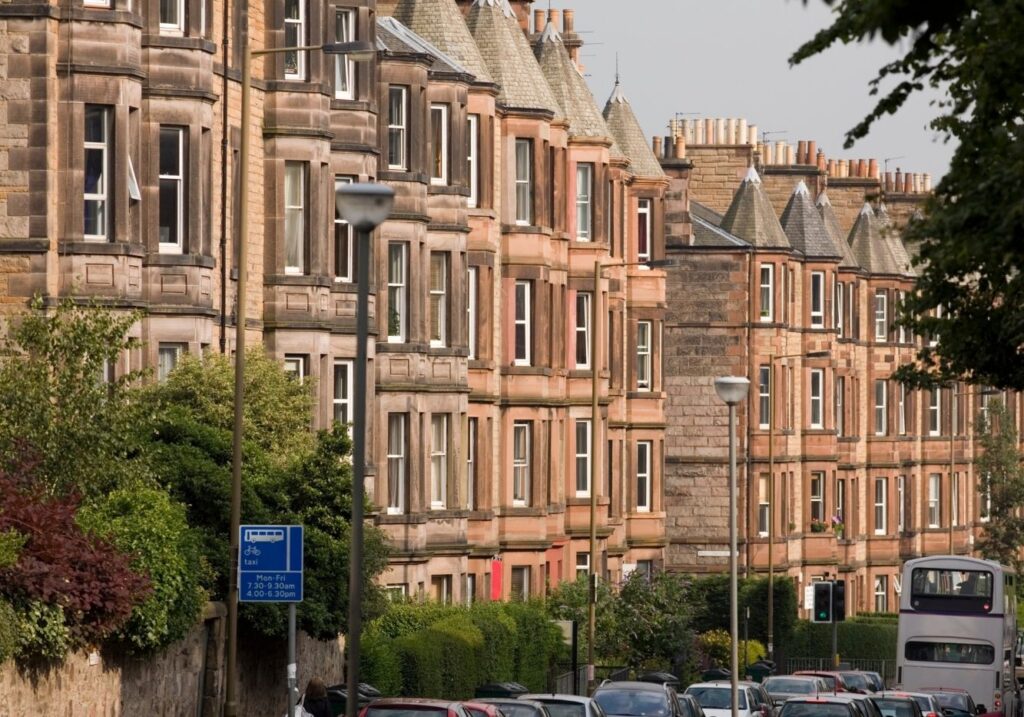
Home Reports for flats and tenements follow the same general process as reports for other Scottish homes. However, flats form part of a larger building, so buyers and sellers may need to consider more than the condition inside the individual property.
The roof, exterior walls, gutters and communal areas can all affect the property. Responsibility for maintaining these areas may also be shared between several owners.
Understanding how these factors appear within a Home Report can help sellers prepare properly. It can also help buyers identify the questions they should ask before deciding whether to proceed.
How Home Reports for Flats and Tenements Work
A Scottish Home Report contains three main documents:
- The Single Survey
- The Energy Performance Certificate
- The Property Questionnaire
The Single Survey provides information about the property’s condition, accessibility and market value. The Energy Performance Certificate explains its current energy efficiency, while the Property Questionnaire contains practical information supplied by the seller.
These documents serve the same purpose whether the property is a detached house, modern apartment or traditional tenement flat. However, a flat cannot always be considered entirely separately from the wider building.
For example, water entering through a shared roof could eventually affect a top-floor property. Defective gutters or stonework may also lead to dampness within individual flats.
A Home Report can therefore provide useful information about visible defects affecting the property and the building in which it sits.
What Parts of a Tenement Building Does the Surveyor Consider?
The Single Survey is an objective inspection and valuation. The surveyor will assess the property and any relevant areas that can be seen or accessed safely during the inspection. However, this does not mean every part of a tenement building will receive a detailed inspection.
Depending on the property and the access available, the surveyor may comment on visible elements such as:
The roof and chimneys
The condition of a tenement roof can affect several properties within the building. Missing slates, damaged flashings or defective chimney details may allow water to enter.
However, high-level roofs and chimneys are often viewed from ground level or other available vantage points. The surveyor may not have direct access to every area.
External walls and stonework
Traditional tenements often feature sandstone or other masonry that requires regular maintenance. The surveyor may note visible cracking, damaged stonework, defective pointing or signs of water penetration.
These observations can help buyers understand whether maintenance may be required, although specialist advice may still be recommended.
Gutters and rainwater pipes
Blocked, damaged or leaking rainwater goods can contribute to dampness and deterioration. This is particularly important where water is repeatedly directed towards external walls.
The report may draw attention to visible concerns, although concealed or inaccessible sections cannot always be assessed.
Communal entrances and stairs
Communal doors, entrance halls, stairs, landings and shared windows may form part of the overall building.
The surveyor may comment on visible defects where these areas are accessible and relevant. However, the precise scope of the inspection will depend on the property and the access provided.
How Are Shared Repairs Reflected in a Home Report?
Flats and tenements often have shared maintenance arrangements. Several owners may be responsible for contributing towards repairs to the roof, external walls, communal stairs or other common parts.
The exact division of responsibility can depend on the property’s title deeds and the legal arrangements affecting the building. Where the deeds do not provide a suitable maintenance scheme, the Tenement Management Scheme may apply.
The Home Report should not be treated as a substitute for legal advice about ownership or liability. A buyer’s solicitor can examine the title documents and explain which areas are shared, how decisions are made and how repair costs may be divided.
However, the report can still help buyers identify matters that deserve further attention.
A condition rating affecting a common part may indicate that work could be needed. The comments alongside the rating should explain the surveyor’s observations and whether further investigation is recommended.
Buyers should read the full comments rather than focusing on the condition rating alone.
Why the Property Questionnaire Matters for Tenement Flats
The Property Questionnaire can be particularly useful when a home forms part of a shared building.
The seller may provide information about:
- Property factoring or management arrangements
- Responsibility for shared areas
- Common buildings insurance
- Repairs completed during their ownership
- Notices relating to proposed work
- Alterations made to the property
- Any known shared repair obligations
Scottish Government guidance confirms that sellers should disclose responsibilities relating to common repair work within the Property Questionnaire. It also highlights property management and shared-area responsibilities as relevant information.
However, the questionnaire records information supplied by the seller. It is not an independent inspection of the building’s management arrangements.
Buyers should therefore review it alongside the Single Survey and ask their solicitor to confirm any important legal or financial details.
This is particularly important where major communal work has been proposed, agreed or recently completed.
What Is the Role of a Property Factor?
Some blocks are managed by a registered property factor. The factor may organise maintenance, arrange insurance or obtain quotations for communal repairs.
Property factors can play an important role in helping owners manage and protect common property. However, the services provided and the costs involved can vary between buildings.
Before purchasing a factored property, buyers may wish to establish:
- How much the regular factoring charges are
- What services those charges include
- Whether there is a common repair or maintenance fund
- Whether any major work is planned
- Whether the current owner owes any outstanding charges
- How repair decisions are made
Some of this information may appear in the Property Questionnaire. Further details may be obtained through the seller, the property factor or the buyer’s solicitor.
What Happens When Communal Areas Cannot Be Inspected?
Access can affect any property inspection, but it can be particularly relevant within flats and tenements.
The surveyor may be unable to inspect areas such as:
- Locked basements or cellars
- Roof spaces without safe access
- High-level roofs and chimneys
- Enclosed rear areas
- Private cupboards containing communal services
- Parts of the building hidden by finishes or stored belongings
Where an area cannot be inspected, the report may explain the limitation. The surveyor may also recommend further investigation if there is evidence of a possible defect or if additional information is required.
A recommendation for further investigation does not automatically confirm that a serious problem exists. Instead, it indicates that the available inspection was not enough to provide a firm conclusion.
Buyers should consider the recommendation carefully and obtain suitable advice before committing to the purchase.
What Should Buyers Check in Home Reports for Flats and Tenements?
Buyers should consider the condition of the individual flat and the wider building.
Important areas to review include:
- Condition ratings for the roof, walls and rainwater goods
- Comments about dampness or water penetration
- Visible deterioration to stonework or render
- Limitations affecting the inspection
- Recommendations for further investigation
- Details of previous or planned communal repairs
- Property factoring arrangements
- Shared buildings insurance
- Information supplied in the Property Questionnaire
It is also important to consider the age and construction of the building.
Older tenements often require ongoing maintenance. The presence of a repair recommendation does not necessarily mean the property should be avoided. Instead, buyers should understand the nature of the issue, its urgency and the potential cost involved.
A well-maintained traditional tenement may still receive some Category 2 ratings because components have aged or will need future attention.
How Can Sellers Prepare for a Tenement Home Report?
Good preparation can help the surveyor access the relevant areas and record accurate information.
Before the inspection, sellers should:
- Provide keys for accessible communal areas where possible
- Make sure the surveyor can move safely around the property
- Gather details of the property factor
- Locate documents relating to recent communal repairs
- Find guarantees, permissions or completion certificates for relevant work
- Check whether any major building work has been proposed
- Complete the Property Questionnaire accurately
Sellers should not attempt to hide known defects. Clear information helps the surveyor complete the report and reduces the risk of questions arising later.
Where shared work has recently been completed, invoices, guarantees and correspondence may help explain what was done.
Arrange a Home Report for a Flat or Tenement in Scotland
Home Reports for flats and tenements require an understanding of both the individual property and its place within a shared building.
Visible roof defects, deteriorating stonework, communal repairs and factoring arrangements can all provide important context for buyers. Sellers can support the process by providing access and gathering accurate information before the inspection.
Home Report Company provides independent Home Reports through experienced RICS surveyors across Scotland.